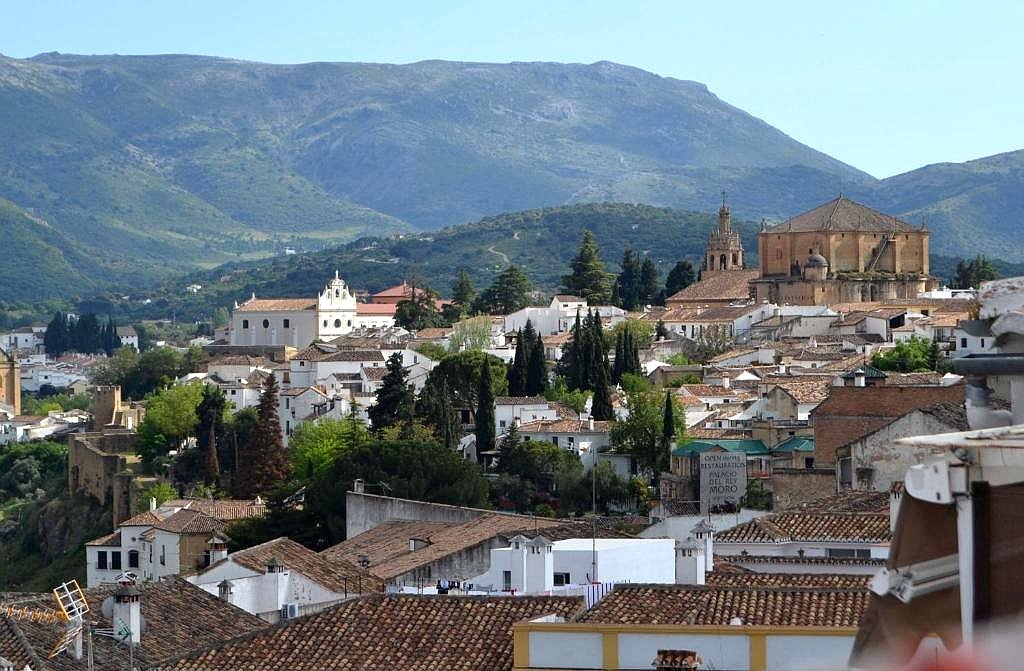

Ronda is one of the most spectacular towns in Andalucía, dramatically perched above the El Tajo gorge in the mountains of Málaga province. Famous for its Puente Nuevo bridge, historic old town and extraordinary landscapes, Ronda is much more than a place to stop for a photograph.
The city is compact enough to explore on foot, but there is plenty to discover beyond the famous bridge: historic palaces and churches, the old Arab Baths, Spain’s oldest bullring, viewpoints over the gorge, traditional restaurants and walking routes into the surrounding countryside.
Ronda also makes an excellent base for exploring the Serranía de Ronda, with its white villages, natural parks, mountains and wildlife.
I’ve lived in this part of Andalucía for around 20 years, and this guide is intended as an introduction to Ronda and a starting point for exploring the much more detailed information available here at Ronda Today.
Where is Ronda?
Ronda is in the province of Málaga in southern Andalucía, Spain, about 750 metres above sea level in the Serranía de Ronda.

That unusual setting is the first thing many visitors notice. Ronda isn’t simply a historic town with attractive countryside around it. The landscape is part of the city itself.
The gorge, cliffs and mountains are visible from streets, squares and viewpoints throughout the town.
Despite its dramatic setting, Ronda is a relatively compact city and most of the historic centre can easily be explored on foot.
Planning how to get here? See our guide to getting to Ronda.
Why visit Ronda?
There are plenty of beautiful towns in Andalucía, but Ronda has something that is difficult to replicate. The city is built around a spectacular natural landscape.
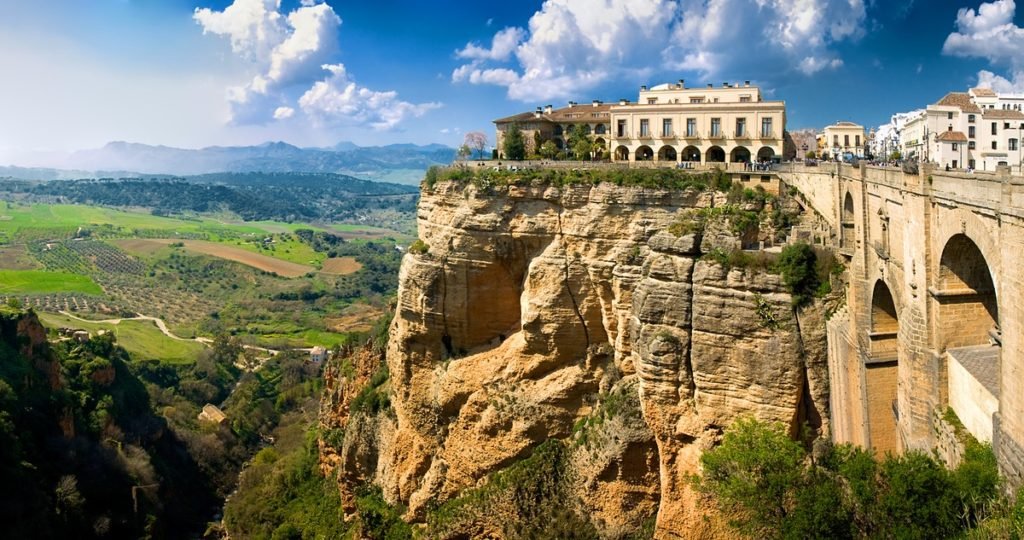
The Puente Nuevo spans the El Tajo gorge and connects the newer part of Ronda with the historic old town. Below it, the gorge drops dramatically towards the Guadalevín River, while the mountains of the Serranía stretch away in every direction.
But the bridge is only the beginning.
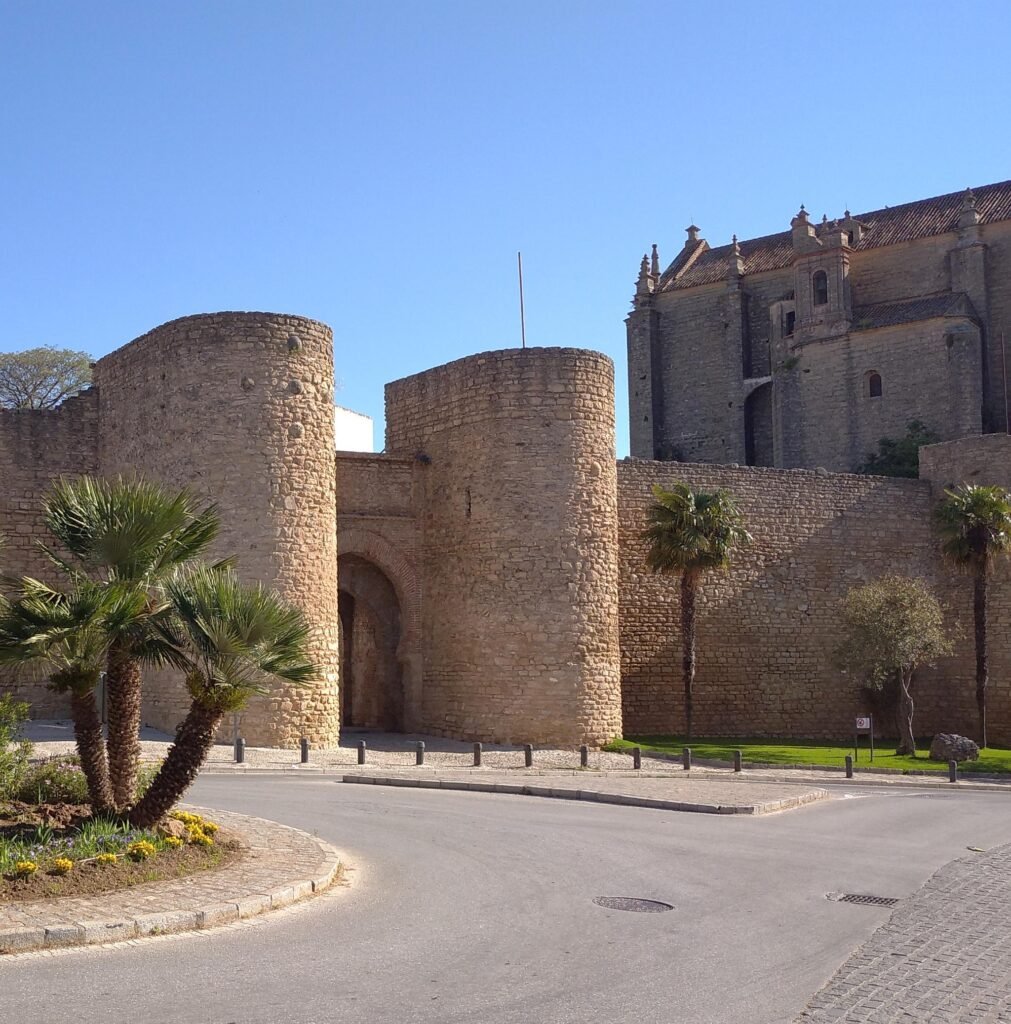
Ronda’s historic centre contains narrow streets, old houses, churches, palaces and former Islamic buildings. The city also has a long association with bullfighting, while its surrounding countryside provides opportunities for walking, wildlife watching and exploring the famous white villages of Andalucía.
Ronda is also small enough to feel manageable.
You can spend a morning visiting the major sights, stay for a couple of days and explore more slowly, or use the city as a base for discovering the surrounding mountains and villages.
What is Ronda famous for?
Puente Nuevo and El Tajo Gorge
The Puente Nuevo is undoubtedly Ronda’s most recognisable landmark.
Completed in the eighteenth century, the bridge crosses the El Tajo gorge and has become one of the defining images of Andalucía.

But the best way to appreciate it isn’t simply to stand on the bridge and take a photograph.
There are viewpoints from different parts of the city, walking routes into the gorge and places where you can see the bridge from below.
See our detailed guide to the Puente Nuevo and the El Tajo gorge.
The old town
Ronda’s old town, or La Ciudad, lies on the southern side of the gorge.
This is where you’ll find some of the city’s oldest streets and buildings, including historic houses, churches, palaces and remnants of Ronda’s Islamic past.
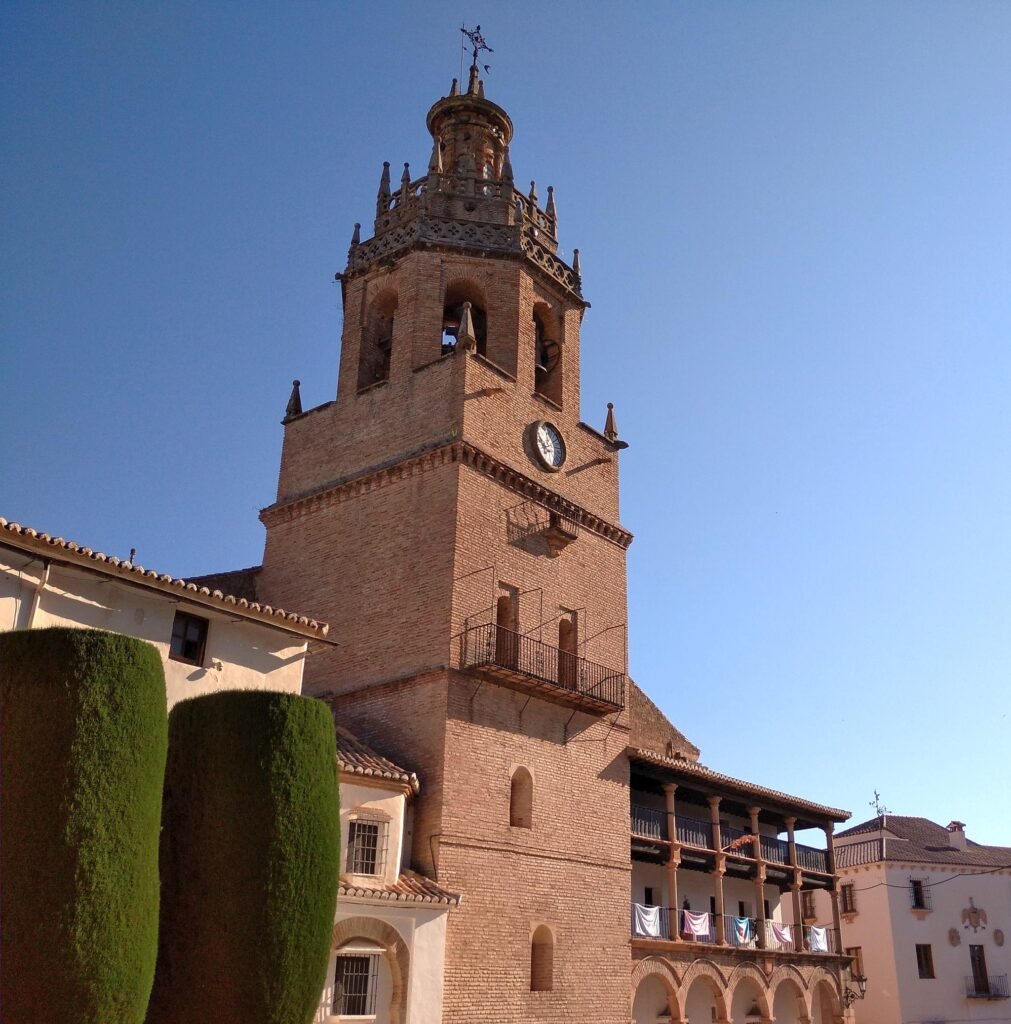
It is worth allowing time simply to wander rather than treating the old town as a checklist of attractions.
The Real Maestranza bullring
Ronda’s Real Maestranza bullring is one of the city’s best-known historic buildings and has an important place in the development of modern Spanish bullfighting.

The annual Feria Goyesca has also helped give Ronda an international reputation.
The Arab Baths
The Baños Árabes are among the best-preserved examples of historic Islamic bathing architecture in Spain.
They provide a very different experience from the spectacular views around the gorge and are a reminder that Ronda’s history stretches well beyond its most famous monuments.

Palaces, churches and museums
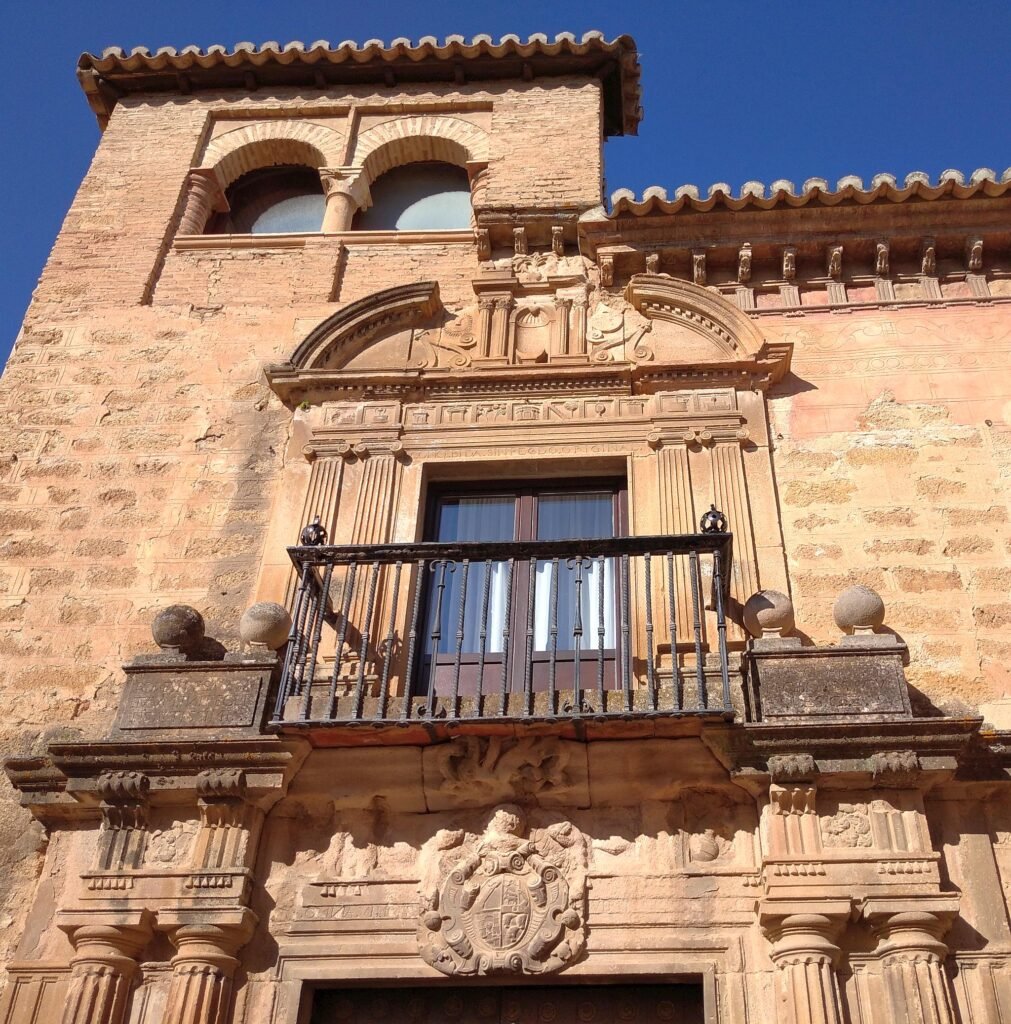
There is much more to see around the old town, including Mondragón Palace, historic churches, museums and former noble houses.
If you’re planning your first visit, our guide to things to do in Ronda brings together the main attractions and experiences.
How long should you spend in Ronda?
You can see the main sights of Ronda in a day, which is why the city is a popular stop on Andalucía itineraries and day trips. But, one day isn’t the same as seeing everything Ronda has to offer.
Ronda in one day
- With one full day, you can visit the Puente Nuevo, explore the old town, see some of the principal monuments and enjoy a meal in the city.
- If you’re visiting as part of a wider Andalucía trip, this gives you a good introduction to Ronda.
Two days in Ronda
- Two days gives you considerably more time.
- You can explore the major sights without rushing, walk around the gorge, discover quieter parts of the old town and enjoy Ronda in the evening after many day visitors have left.
Staying longer
- Ronda becomes particularly interesting as a base for exploring the surrounding countryside.
- The Serranía contains white villages, mountains, protected natural areas, walking routes and archaeological sites that are difficult to appreciate properly on a rushed day trip.
Exploring Ronda on foot
Ronda is an easy city to explore without a car once you’re in the centre.
The major sights around the historic centre are relatively close together, although the gorge and some of the walking routes involve steep sections.
One of the pleasures of visiting Ronda is simply walking between the attractions rather than treating each one as an isolated stop.
You can cross the Puente Nuevo, explore the old town, walk through the Alameda del Tajo and continue towards the viewpoints around the gorge.
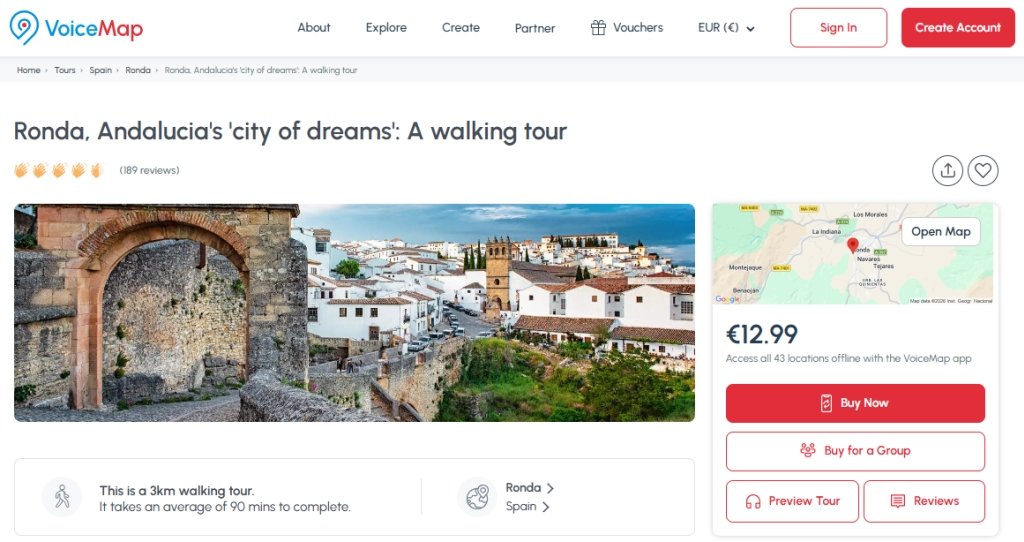
For visitors who want more information as they walk, the Ronda Today VoiceMap GPS Audio Guide follows a route through the city and explains the places you’ll encounter along the way.
Ronda as a base for the Serranía de Ronda
One of the things I think visitors sometimes miss is that Ronda is not just a destination in its own right — it is also the main gateway to a much larger region.
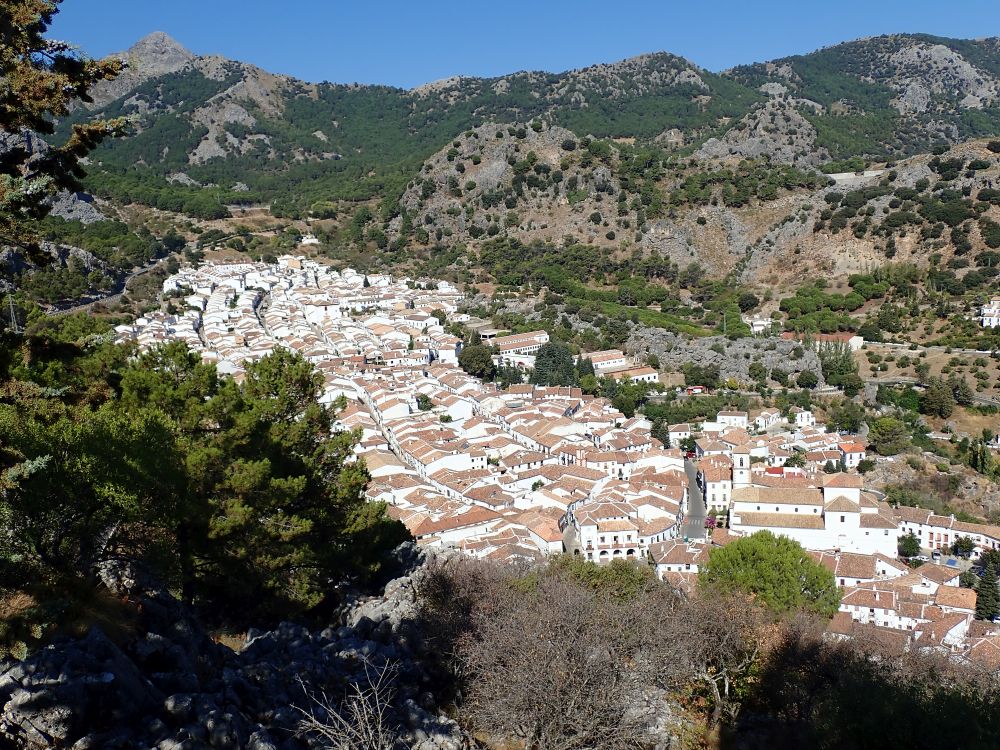
The Serranía de Ronda extends into the mountains around the city and includes some of Andalucía’s best-known white villages and protected natural areas.
The white villages
Within the wider area are villages including:
- Setenil de las Bodegas
- Grazalema
- Gaucín
- Júzcar
- Benalauría
- Montejaque
- Teba
- Cortes de la Frontera
- Igualeja
Each has its own character and landscape.
Explore our guide to the White Villages around Ronda.
Natural parks
Three important protected areas are particularly relevant to visitors based in Ronda. I’ve covered each of them in much greater detail on Wildside Holidays, where you’ll find comprehensive guides to the landscapes, wildlife and walking opportunities in Spain’s natural parks.
- Sierra de Grazalema Natural Park
Known for its dramatic limestone mountains, deep gorges, caves and the rare Spanish fir, or pinsapo. - Los Alcornocales Natural Park
A huge area of cork-oak woodland extending towards the Cádiz province. - Sierra de las Nieves National Park
Mountain landscapes, forests, wildlife and some of the highest peaks in the area.
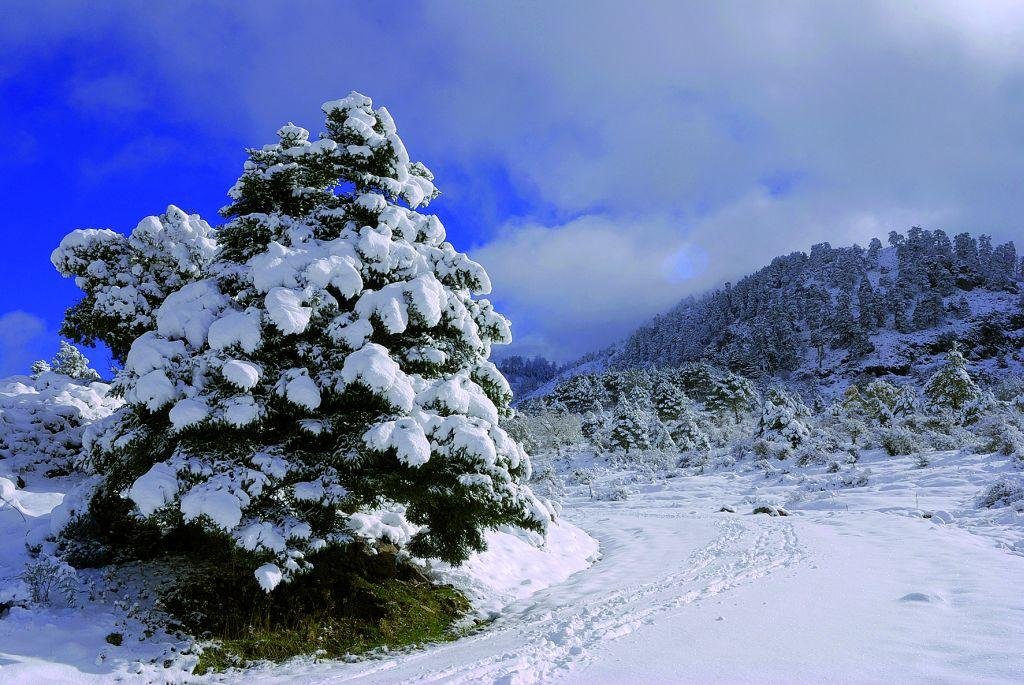
The surrounding countryside is also important for wildlife, with numerous species adapted to the mountains and Mediterranean landscape.
Beyond the white villages: history and archaeology
The Serranía is not only about scenery.
The area around Ronda contains evidence of human occupation going back thousands of years, including prehistoric cave sites and archaeological remains.
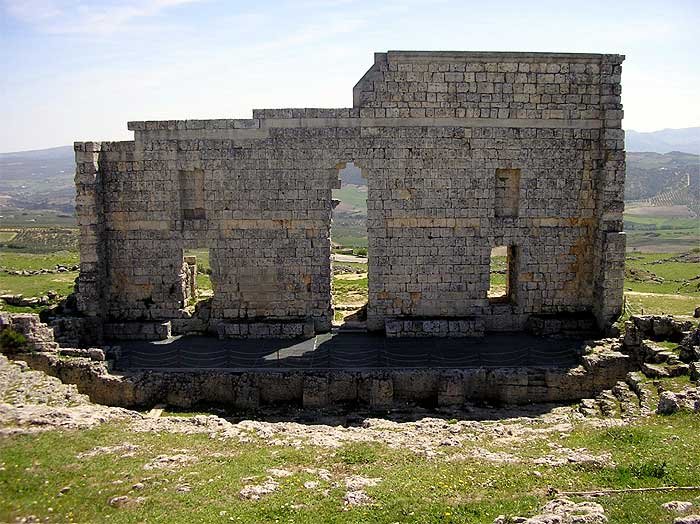
One of the most important sites is Acinipo, the remains of a Roman city located outside modern Ronda.
The surrounding area also contains prehistoric cave paintings and Neolithic monuments. The Pileta cave makes for an exceptional visit!

This is one of the reasons I think Ronda works particularly well as a base for a longer stay: there is an enormous amount to explore once you look beyond the Puente Nuevo.
Why is Ronda called the “City of Dreams”?
The nickname is closely associated with the German poet Rainer Maria Rilke, who stayed in Ronda in 1912–13.

He famously described Ronda as the “city of his dreams” and the association has remained ever since.
Rilke was certainly not the only famous person attracted to Ronda. The city has also been associated with figures including Orson Welles, Ernest Hemingway and Jorge Luis Borges, as well as many other writers, artists and visitors.
But the Rilke story is particularly appropriate because it captures something that photographs of the Puente Nuevo don’t quite convey:
What is Ronda like?
- Ronda has become an internationally popular destination, but it remains a working Andalusian city rather than simply a collection of monuments.
- Around the historic centre you’ll find ordinary residential streets, shops, supermarkets, cafés, restaurants and services used by local people.
- The population is large enough to give the city the facilities you’d expect from a regional centre, while the historic centre remains compact enough to explore on foot.
- The altitude also gives Ronda a different climate from Andalucía’s coastal resorts.
- Summer can still be extremely hot, but temperatures are generally more manageable than in many lower-lying parts of southern Spain, particularly once you get away from the hottest part of the afternoon.
- And in winter, the mountain setting becomes much more noticeable.
Where should you stay in Ronda?
Ronda has accommodation ranging from simple hostels and apartments to historic hotels and larger four-star properties.
Four star hotels in Ronda include the Parador, Molino del Arco, Reina Victoria, Montelirio, Maestranza, Acinipo, Ronda Valley, and Hotel San Gabriel.
Some of the most attractive places to stay take advantage of the city’s spectacular position, with rooms, terraces or balconies overlooking the El Tajo gorge or the surrounding mountains.
Staying overnight also gives you the chance to experience a different side of Ronda.
The city is busiest during the main daytime sightseeing period. In the evening, once many day visitors have left, the historic centre takes on a quieter atmosphere.
See our guide to where to stay in the old town of Ronda.
Planning a visit to Ronda?
Once you’ve decided to visit, these are the practical Ronda Today guides you’ll probably find most useful:
Things to do in Ronda
Our guide to the principal attractions, experiences and places to visit.
Getting to Ronda
Information about travelling to the city by car, bus and train.
Parking in Ronda
Where to leave your car and what you need to know before driving into the city.
Walking in Ronda
Routes and walks around the gorge, old town and surrounding countryside.
Ronda map
A practical way to orient yourself before and during your visit.
Ronda audio guide
A GPS walking tour created from the information and research published here at Ronda Today.
Visiting Ronda for a day trip?
Guided tours and activities in Ronda From Get Your Guide
Short clip by the Ronda Tourist board showing some popular places in Ronda the “City of Dreams”
Welcome to Ronda!
Ronda is famous because of one extraordinary bridge.
But the bridge is not the whole story.
The gorge, the old city, the mountains, the white villages, the history and the countryside around Ronda are what make the destination worth spending time in.
I’ve been exploring and living in this part of Andalucía for around 20 years, and Ronda Today exists to help visitors get beyond the obvious photograph and discover more of the city and the surrounding region.
Start with our Things to Do in Ronda guide, or browse the individual guides below to plan your visit.
Ronda is called the “city of dreams” for its dramatic scenery and inspiring atmosphere. This white town in Andalucia is famous for its walkable cobbled streets, the Puente Nuevo bridge over El Tajo Gorge, and its historic bullring. Located at 723m on a rock platform, it once served as an impregnable fortress. Notable visitors like Rainer Maria Rilke, Orson Welles, and Ernest Hemingway found inspiration here.
Visitors should not miss the Puente Nuevo, Real Maestranza bullring, and El Tajo Gorge. The town also offers beautiful churches, museums, and local tapas bars. Walking tours—especially with the VoiceMap GPS Audio Guide—reveal sights that inspired Rilke and others.
Ronda offers accommodations ranging from hostels to four-star hotels. Top picks like the Parador, Montelirio, and Reina Victoria offer balconies or windows overlooking the Tajo Gorge. These provide guests with stunning mountain and gorge views to enhance their stay.
Yes, Ronda is compact and walkable. Most major sights are within a 10- to 30-minute walk, often less than 300 meters apart near Puente Nuevo. The site offers a free printable map and recommends the VoiceMap Audio Guide for efficient exploration.
“Ronda Today” provides updated travel guides, hotel listings, walking routes, and booking links for local tours and transport. It includes info on nearby white villages and natural parks, helping visitors plan trips efficiently with reliable insider tips.
Ronda is a gateway to the Serranía de Ronda and several white villages like Setenil and Grazalema. Nearby natural parks—Grazalema, Alcornocales, and Sierra de las Nieves—offer hiking and wildlife watching. Visitors can also see prehistoric caves and Roman ruins at Acinipo.
The area boasts rare biodiversity, including endemic species like the ancient Pinsapar tree and exclusive orchids. The surrounding natural parks protect these unique ecosystems and offer eco-friendly tourism opportunities.
Ronda has inspired writers and artists such as Rainer Maria Rilke, who called it his “city of dreams.” Other notable visitors include Orson Welles, Ernest Hemingway, James Joyce, Jorge Luis Borges, Madonna, and Jamie Oliver.
Visitors can enjoy immersive cookery classes, olive oil tours, and guided hikes. These activities offer a deeper understanding of Andalusian culture and provide a hands-on way to connect with Ronda’s heritage.

I’ve been living in this lovely area of Western Andalucia for the last 20 years or so and dedicate most of my time to the running of English language tourist information websites for the towns of Cádiz, Ronda, Grazalema, the famous or infamous Caminito del Rey, and also Wildside Holidays, which promotes sustainable and eco-friendly businesses running wildlife and walking holidays in Spain. My articles contain affiliate links that will help you reserve a hotel, bus, train or activity in the area. You don’t pay more, but by using them you do support this website. Thankyou!
Ronda truly sounds like a dream destination! I love how you’ve highlighted both the stunning scenery and the rich history. The tips on walking tours and the VoiceMap Audio Guide are especially helpful — I can’t wait to explore the Puente Nuevo and El Tajo Gorge myself. Thanks for sharing such a detailed guide!
We stayed in the Ronda Parador for 4 nights. It was fantastic!
I can’t recommend Ronda Today enough for anyone planning a trip to this part of Andalusia. The website became my go-to resource throughout my entire visit. The comprehensive information on attractions, historical sites, and natural parks was fantastic. I particularly appreciated the walking tour suggestions, which allowed me to discover hidden gems and experience the true essence of Ronda. The hotel booking feature made finding accommodations a breeze, and the links were convenient for booking activities. Ronda Today truly made my trip unforgettable.Thanks!
Ronda Today has been an invaluable resource for my trip to Ronda. Up-to-date information on attractions, hotels, and activities in the area. The detailed guides and recommendations helped me plan my itinerary effectively. I especially loved the section on the nearby ‘Pueblos Blancos.’ Thanks to Ronda Today, I had a memorable and enjoyable experience exploring this charming town and nearby villages.
Ronda Today has played a crucial role in making my visit to Ronda exceptional. The website is a treasure trove of information, providing detailed insights into the town’s history, culture, and must-visit spots. The section on ‘Pueblos Blancos’ was a delightful discovery, and I ended up exploring several of these picturesque villages based on the recommendations provided.
What truly sets Ronda Today apart is the constant updates and fresh content. The site feels alive and vibrant, with the latest information at your fingertips. I particularly enjoyed the contributions from fellow travelers, sharing their photos, anecdotes, and reviews. It created a sense of community and made me feel connected to other visitors.
I must mention the VoiceMap GPS Audio Guide for Ronda, which I discovered through Ronda Today. It was an immersive and engaging way to explore the town. The guide seamlessly integrated with the website’s content, offering in-depth commentary and fascinating stories about the landmarks I visited. Thanks – Sarah! :)