If you enjoy fish and seafood, eating out in Ronda is a good opportunity to discover some of the traditional dishes of Andalucía. However, Spanish menus can be confusing if you don’t recognise the names of the fish, shellfish and seafood on offer.
This guide brings together the Spanish names you’ll commonly encounter, their English translations and some useful phrases for ordering in local restaurants. Keep it handy when reading a menu, asking about the catch of the day or deciding how you’d like your fish cooked.
Spanish Fish and Seafood Vocabulary
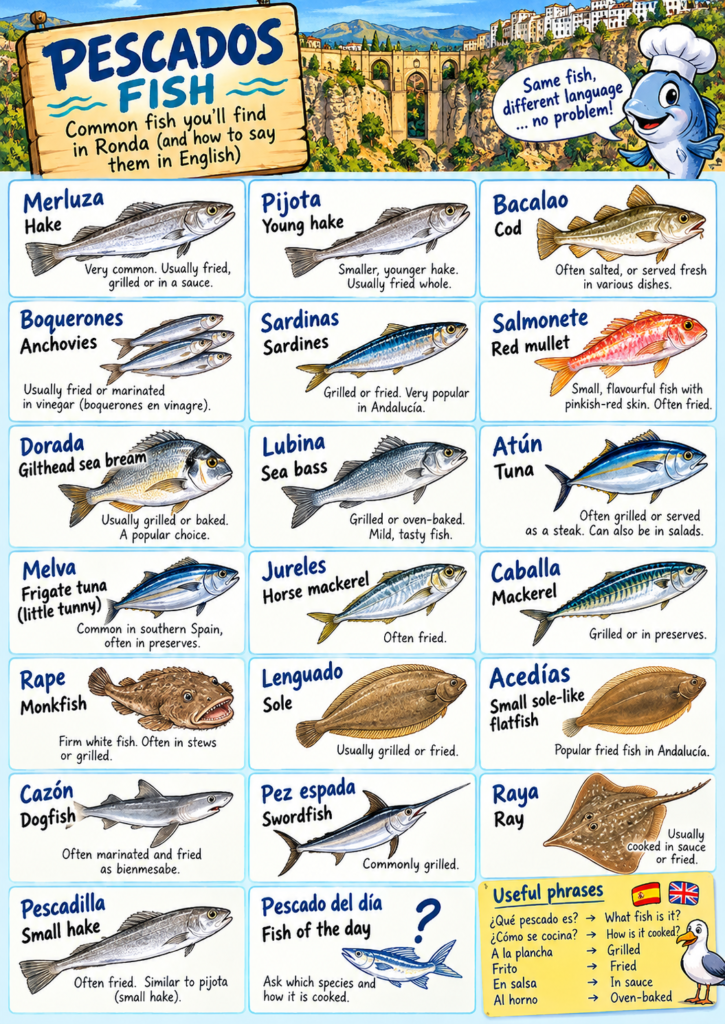
Use this list alongside the fish vocabulary image above to identify the Spanish names and their English equivalents.
- Merluza – Hake
- Pijota – Young hake
- Bacalao – Cod
- Boquerones – Anchovies
- Sardinas – Sardines
- Salmonete – Red mullet
- Dorada – Gilthead sea bream
- Lubina – Sea bass
- Atún – Tuna
- Melva – Frigate tuna (little tunny)
- Jureles – Horse mackerel
- Caballa – Mackerel
- Rape – Monkfish
- Lenguado – Sole
- Acedías – Small sole-like flatfish
- Cazón – Dogfish
- Pez espada – Swordfish
- Raya – Ray
- Pescadilla – Small hake
- Pescado del día – Fish of the day
A useful tip: pescado del día doesn’t tell you which fish you’ll receive. Ask the waiter which species is available and how it is prepared.
Spanish Seafood Vocabulary
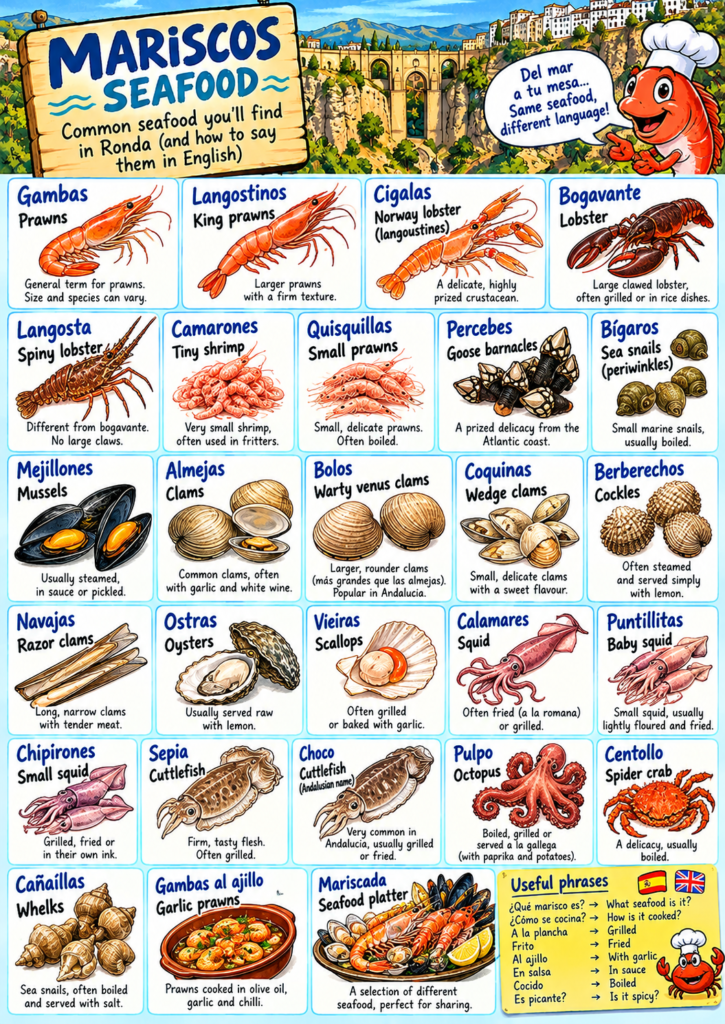
The seafood image covers many of the shellfish and other marine delicacies you’ll see on Spanish menus. Here are the translations to help you order.
- Gambas – Prawns
- Langostinos – King prawns
- Cigalas – Norway lobster (langoustines)
- Bogavante – Lobster
- Langosta – Spiny lobster
- Camarones – Tiny shrimp
- Quisquillas – Small prawns
- Percebes – Goose barnacles
- Bígaros – Sea snails (periwinkles)
- Mejillones – Mussels
- Almejas – Clams
- Bolos – Warty venus clams
- Coquinas – Wedge clams
- Berberechos – Cockles
- Navajas – Razor clams
- Ostras – Oysters
- Vieiras – Scallops
- Calamares – Squid
- Puntillitas – Baby squid
- Chipirones – Small squid
- Sepia – Cuttlefish
- Choco – Cuttlefish (a common Andalusian name)
- Pulpo – Octopus
- Centollo – Spider crab
- Cañaíllas – Whelks
- Gambas al ajillo – Garlic prawns
- Mariscada – Seafood platter
Some names overlap, and usage can vary between regions and restaurants. In particular, camarones, quisquillas and gambas don’t always refer to precisely the same species. The English translations are practical menu equivalents rather than a strict scientific classification.
Traditional Spanish Fish and Seafood Dishes
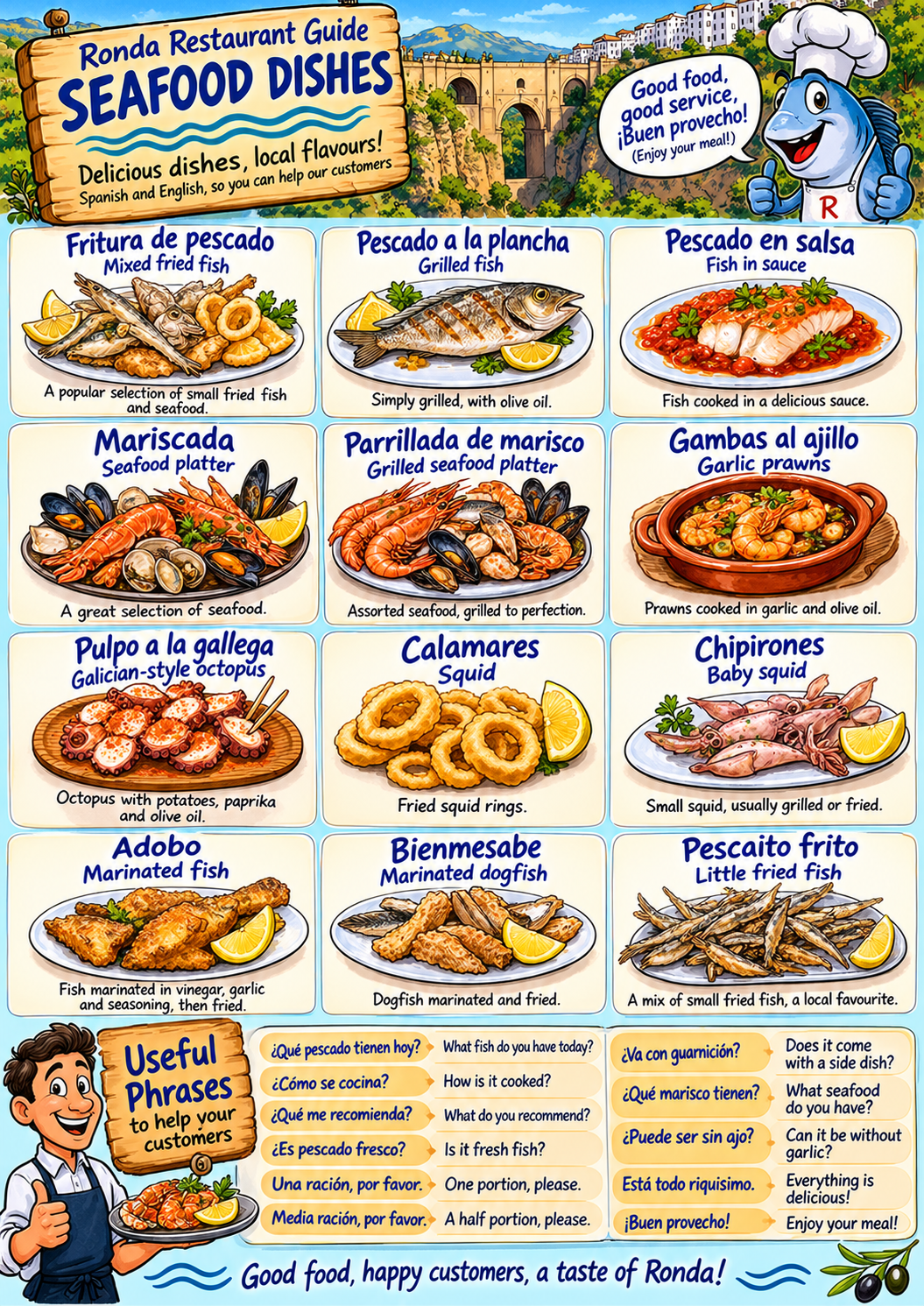
Knowing the names of individual fish is useful, but menus also feature prepared dishes. The above image introduces some popular options you’ll encounter in Spain, including these:
- Fritura de pescado – Mixed fried fish
- Pescado a la plancha – Grilled fish
- Pescado en salsa – Fish in sauce
- Mariscada – Seafood platter
- Parrillada de marisco – Grilled seafood platter
- Gambas al ajillo – Garlic prawns
- Pulpo a la gallega – Galician-style octopus, traditionally served with potatoes, paprika and olive oil
- Calamares – Squid, often served as fried rings
- Chipirones – Baby squid, grilled or fried
- Adobo – Fish marinated in a seasoned mixture, often including vinegar and garlic
- Bienmesabe – Marinated dogfish, a traditional speciality of Cádiz province
- Pescaito frito – A selection of small fried fish
One important distinction: fritura de pescado is usually a selection of different fried fish, while pescaito frito refers more broadly to small fried fish. The exact contents depend on the restaurant.
Useful Spanish Phrases for Ordering Fish and Seafood
These expressions are particularly handy when ordering in a restaurant in Ronda.
- ¿Qué pescado tienen hoy? – What fish do you have today?
- ¿Cómo se cocina? – How is it cooked?
- ¿Qué me recomienda? – What do you recommend?
- ¿Es pescado fresco? – Is it fresh fish?
- ¿Va con guarnición? – Does it come with a side dish?
- ¿Qué marisco tienen? – What seafood do you have?
- ¿Puede ser sin ajo? – Can it be without garlic?
- Una ración, por favor. – One portion, please.
- Media ración, por favor. – Half a portion, please.
- A la plancha – Grilled
- Frito – Fried
- En salsa – In sauce
- Al horno – Oven-baked
- Al ajillo – Cooked with garlic
- Cocido – Boiled
- ¿Es picante? – Is it spicy?
- ¡Está todo riquísimo! – Everything is delicious!
- ¡Buen provecho! – Enjoy your meal!
Enjoying Fish and Seafood in Ronda
Although Ronda is inland, fish and seafood feature on many restaurant menus. You’ll find familiar Spanish favourites alongside regional specialities, including bienmesabe, which is particularly associated with Cádiz.
Don’t be afraid to ask questions. If you see an unfamiliar name, ask what the fish is, how it is prepared and whether it comes with a side dish. A little Spanish goes a long way towards making ordering easier and discovering something new.
Keep these lists and images handy during your visit, and you’ll be better prepared to explore the fish and seafood dishes on offer in Ronda.
Frequently Asked Questions About Fish and Seafood in Ronda
The Spanish word for fish is pescado when referring to fish as food. You may also see pez, which generally refers to a live fish.
Hake is called merluza in Spanish. Smaller hake may be listed as pescadilla, while pijota commonly refers to young hake.
Bienmesabe is a traditional Andalusian dish made with dogfish marinated in a seasoned mixture and then fried. It is particularly associated with Cádiz province.
Both are types of prawns, but langostinos generally refers to larger prawns, often translated as king prawns. The precise species and sizes offered can vary.

I’ve been living in this lovely area of Western Andalucia for the last 20 years or so and dedicate most of my time to the running of English language tourist information websites for the towns of Cádiz, Ronda, Grazalema, the famous or infamous Caminito del Rey, and also Wildside Holidays, which promotes sustainable and eco-friendly businesses running wildlife and walking holidays in Spain. My articles contain affiliate links that will help you reserve a hotel, bus, train or activity in the area. You don’t pay more, but by using them you do support this website. Thankyou!