Love it or hate it, bullfighting is an important part of Spanish heritage with most people only learning about it from a short visit to a bullring. Reservatauro Ronda has changed that and allows people to see a more in depth perspective of bulls and bullfighting.
I’ve been living in this lovely area of Western Andalucia for the last 20 years or so and dedicate most of my time to the running of English language tourist information websites for the towns of Cádiz, Ronda, Grazalema, the famous or infamous Caminito del Rey, and also Wildside Holidays, which promotes sustainable and eco-friendly businesses running wildlife and walking holidays in Spain. My articles contain affiliate links that will help you reserve a hotel, bus, train or activity in the area. You don’t pay more, but by using them you do support this website. Thankyou!
The Ronda style of bullfighting is rumored to have originated by accident in Ronda’s Philip II’s Centre for Horsemanship when a gentleman training on horse was unseated in the path of a bull they used to train officers in horsemanship.
A local man, Francisco Romero distracted the bull on foot using his hat, thus securing both the life of the aristocrat, and inventing a new form of bullfighting perfected by his grandson, Pedro Romero (1754-1839).
I’ve been living in this lovely area of Western Andalucia for the last 20 years or so and dedicate most of my time to the running of English language tourist information websites for the towns of Cádiz, Ronda, Grazalema, the famous or infamous Caminito del Rey, and also Wildside Holidays, which promotes sustainable and eco-friendly businesses running wildlife and walking holidays in Spain. My articles contain affiliate links that will help you reserve a hotel, bus, train or activity in the area. You don’t pay more, but by using them you do support this website. Thankyou!
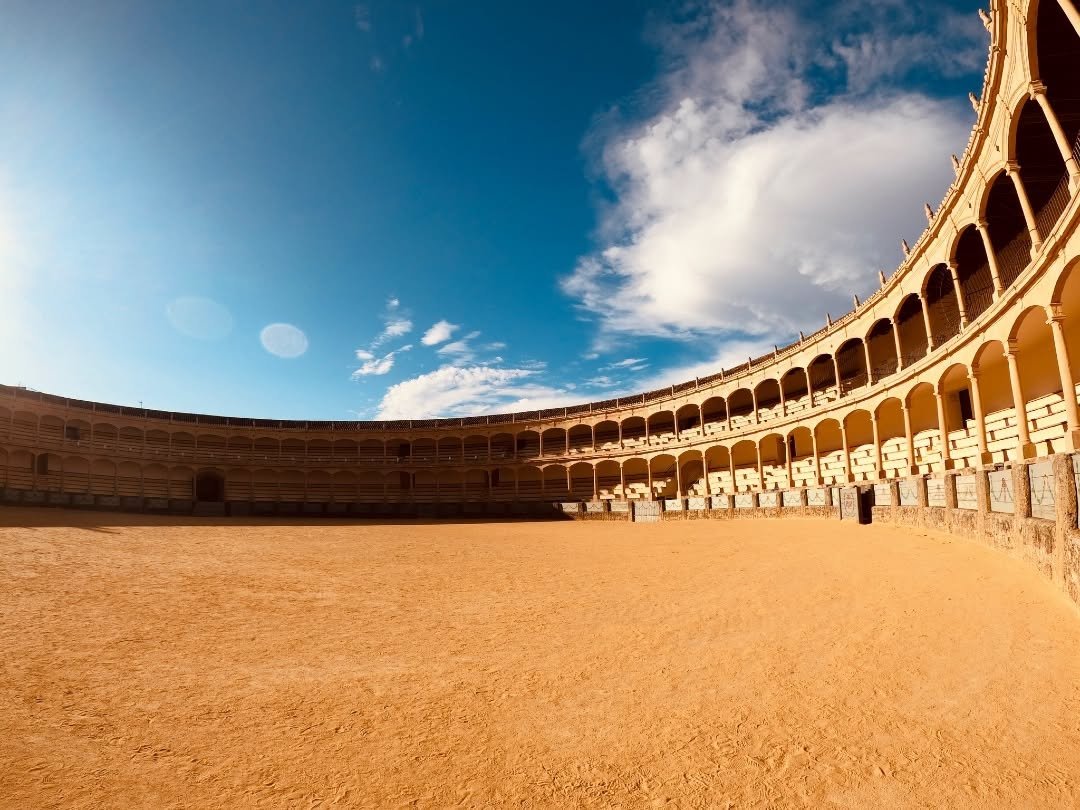
The Plaza de Toros in Ronda is one of the city’s most important historic landmarks and one of the most significant bullrings in Spain. Built in the 18th century, it is closely associated with the Romero family and the development of the Ronda style of bullfighting.
Today, visitors can explore the historic bullring and its museum to learn about Ronda’s role in Spanish culture and the history of bullfighting. You don’t need to be interested in bullfighting itself to appreciate the building, its architecture and its place in Ronda’s history.
Visiting the Plaza de Toros
A visit to the bullring includes access to the arena and museum, where you can learn more about Ronda’s bullfighting history and the Romero dynasty.
Planning your visit to Ronda? The Plaza de Toros is one of the city’s key historic attractions. See our Top 10 places to visit in Ronda for more ideas on what to see and do during your stay.
Agatha Christie: The Seven Dials was filmed in Ronda
Ronda’s Plaza de Toros features in the Netflix miniseries Agatha Christie: The Seven Dials, an adaptation of Agatha Christie’s novel The Secret of Chimneys. Several scenes were filmed in Ronda in September 2024, with the Plaza de Toros among the city’s historic locations used by the production.
The bullring is particularly relevant to the story because the plot has a connection with bullfighting, and it appears in the opening scenes of the series. Other recognisable Ronda locations include the Puente Nuevo, Alameda del Tajo, Arab Baths, Casa del Rey Moro and the area around the Arco de Felipe V.
Would you like to visit a fighting bull farm in Ronda?
Reservatoro Ronda is a working breeding farm for fighting bulls and purebred Andalusian horses, located around 5 km from Ronda. Created by retired bullfighter Rafael Tejada, the farm is open to visitors who can learn about the breeding of fighting bulls and the selection process, while seeing the animals and horses at close quarters.
A visit offers a very different perspective on the traditional world surrounding Ronda’s bullfighting culture and takes you into the countryside just outside the city.
Reservatauro Ronda is an active breeding farm for fighting bulls and purebred Andalusian horses, situated just 5 kilometers from Ronda.
I’ve been living in this lovely area of Western Andalucia for the last 20 years or so and dedicate most of my time to the running of English language tourist information websites for the towns of Cádiz, Ronda, Grazalema, the famous or infamous Caminito del Rey, and also Wildside Holidays, which promotes sustainable and eco-friendly businesses running wildlife and walking holidays in Spain. My articles contain affiliate links that will help you reserve a hotel, bus, train or activity in the area. You don’t pay more, but by using them you do support this website. Thankyou!
One of the most attractive bullrings in Spain, Antequera’s plaza de toros is surrounded by beautiful gardens and the recinto ferial, and includes a delightful tapas bar under the seats.
The Malaga bullring, known by Spaniards as the Plaza de Toros de la Malagueta, sits close to the main beach in Malaga city, giving the entire area its name. The Plaza de Toros can’t be missed as it is visible from Paseo de Reding, the main street connecting Malaga with her eastern villages in the Axarquia.
Built between 1874 and 1876, the structure is hexadecimal (a 16 sided polygon), has a central rueda of 52m, and after the renovations of 2010 can now accommodate 14,000 fans.
I’ve been living in this lovely area of Western Andalucia for the last 20 years or so and dedicate most of my time to the running of English language tourist information websites for the towns of Cádiz, Ronda, Grazalema, the famous or infamous Caminito del Rey, and also Wildside Holidays, which promotes sustainable and eco-friendly businesses running wildlife and walking holidays in Spain. My articles contain affiliate links that will help you reserve a hotel, bus, train or activity in the area. You don’t pay more, but by using them you do support this website. Thankyou!
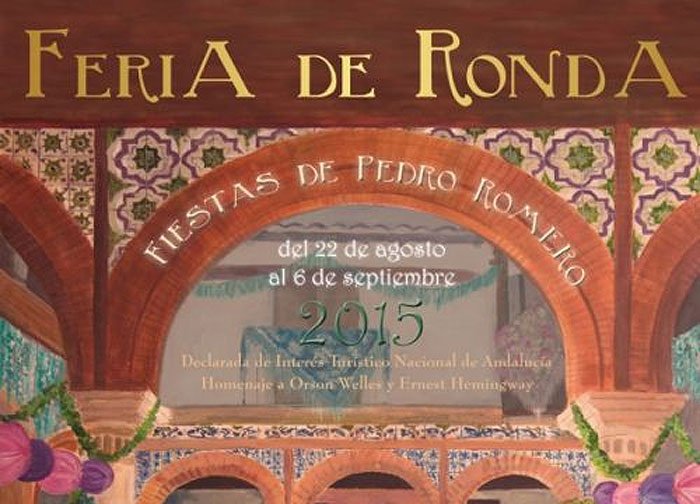
The first week in September is the one time of year when Rondeños really let their hair down and everything comes to a stop for the week long party known as the Feria de Pedro Romero.
Although the weeks festivities start on the 22nd of August the big weekend of bullfighting and parades is the Friday 4th, Saturday 5th and Sunday 6th of September. (The parade of carriages at 12 pm on Sunday 6th)
IMPORTANT: If you want to stay in Ronda to experience the feria and all it has to offer then don’t delay in booking your hotel. Use the booking form to the right as soon as possible! Places will already be limited!
Most of the streets surrounding the Plaza del Socorro become pedestrian only as bars bring their kegs and counters into the street for the hordes who want to party. The last two days of the feria coincide with one of the highlights of the Spanish bullfighting calendar, the Corrida Goyesca.
I’ve been living in this lovely area of Western Andalucia for the last 20 years or so and dedicate most of my time to the running of English language tourist information websites for the towns of Cádiz, Ronda, Grazalema, the famous or infamous Caminito del Rey, and also Wildside Holidays, which promotes sustainable and eco-friendly businesses running wildlife and walking holidays in Spain. My articles contain affiliate links that will help you reserve a hotel, bus, train or activity in the area. You don’t pay more, but by using them you do support this website. Thankyou!
Every year, usually on the Sunday morning following the big Corrida, the Real Maestranza de Caballería de Ronda and the Real Club de Enganches de Andalucía hold a competition to pick the best horse and carriage.
The prizes aren’t significant, no more than a few hundred Euros, but the honour of being awarded the Champion of Champions Trophy at this event far outweighs any other prize on offer at the other provincial Ferías.
Several classes of carriage are judged, starting with single horse carriages, all the way to six horse teams arranged three across. Carriages fall into two and four wheel classes, covered and uncovered, and are usually in immaculate condition. Carriage owners take great pride in the appearance of their carriages, the horses, harnesses, and of course themselves. Click the “continue reading” to see images and video of the horse and carriage show.
I’ve been living in this lovely area of Western Andalucia for the last 20 years or so and dedicate most of my time to the running of English language tourist information websites for the towns of Cádiz, Ronda, Grazalema, the famous or infamous Caminito del Rey, and also Wildside Holidays, which promotes sustainable and eco-friendly businesses running wildlife and walking holidays in Spain. My articles contain affiliate links that will help you reserve a hotel, bus, train or activity in the area. You don’t pay more, but by using them you do support this website. Thankyou!