The Ronda Hemingway connection remains one of the most compelling cultural links in Andalusia. In this feature for Ronda Today, we explore how Ernest Hemingway’s visits to Ronda shaped his writing, his philosophy, and his vision of Spain. Moreover, we examine how the city’s dramatic landscape and bullfighting tradition influenced some of his most important works.
Ronda was not just a stop on his travels. It became a symbolic landscape that helped define his literary identity.

Hemingway in Ronda: First Visit in 1923
Hemingway first visited Ronda in 1923 during his early travels in Spain. That initial encounter left a lasting impression.
He photographed narrow streets, rural scenes, and the dramatic drop of the Tajo gorge. These images are now preserved in the Hemingway Collection at the Kennedy Library in Boston.
Moreover, this early visit marked the beginning of a lifelong fascination with the city. Ronda became his reference point for what he considered the most authentic expression of Andalusian culture.
The Landscape of Ronda and the Idea of Life and Death
One of the defining elements of the Ronda Hemingway connection is the influence of the landscape itself.
The Tajo gorge, which splits the city in two, became for Hemingway a powerful symbol of existential tension. He repeatedly returned to the contrast between beauty and violence that the landscape seemed to embody.
From the heights of the city, he described mule trains moving far below, raising dust in the valley. These details helped shape his vision of Ronda as both romantic and severe.
For Hemingway, the city became a stage where life and death were constantly in dialogue.
Bullfighting and the “Escuela Rondeña”
Ronda is widely regarded as a cradle of modern bullfighting. This tradition, often referred to as the “escuela rondeña”, strongly influenced Hemingway’s writing style.
He admired its core principles:
- Clarity and simplicity
- Emotional restraint
- Technical discipline
- A tragic sense of beauty
Moreover, he translated these ideas directly into his prose. His writing became stripped down, precise, and emotionally charged.
He viewed bullfighting not only as spectacle, but as a model of artistic integrity.
Hemingway and Goya: A Shared Artistic Vision
A remarkable parallel exists between Ernest Hemingway and Francisco de Goya.
Both were deeply drawn to Ronda’s bullfighting culture. However, their connection went beyond admiration.
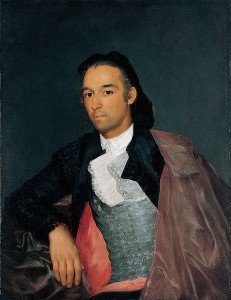
Shared artistic themes include:
- A tragic vision of existence
- Fascination with ritualised violence
- Elevation of bullfighters into cultural figures
- Exploration of dignity in danger
Goya famously portrayed Pedro Romero, the legendary Ronda bullfighter, with dignity and symbolic weight.
Centuries later, Hemingway echoed this devotion through his admiration for Antonio Ordóñez, another Ronda icon. He documented this relationship in The Dangerous Summer.
Moreover, both artists helped elevate Ronda’s bullfighting culture into international artistic mythology.
Hemingway and Ronda in His Major Works
Ronda appears across several of Hemingway’s most important works.
The Sun Also Rises (Fiesta)
The legacy of Pedro Romero reflects Ronda’s bullfighting tradition.
Death in the Afternoon
Hemingway recommends Ronda as one of the best places in Spain to see a bullfight, praising its atmosphere and authenticity.
For Whom the Bell Tolls
The unnamed village in Chapter 10 is widely interpreted by scholars as being based on Ronda.
The Dangerous Summer
The rivalry between Antonio Ordóñez and Luis Miguel Dominguín brings Ronda’s modern bullfighting world into focus.
Did Hemingway Stay in Ronda? The Truth Behind the Myth
Many popular stories suggest specific hotels or residences connected to Hemingway in Ronda. However, the historical record is more cautious.
What is known is the following:
- Hemingway visited Ronda multiple times from the 1920s onwards. He clearly stayed in local accommodation, as would be expected during his travels. However, he never recorded the name of a specific hotel or private residence in Ronda in his published writings or surviving correspondence.
- Some modern tourism narratives suggest particular locations linked to him. However, these claims are generally based on tradition rather than documented evidence.
- What Hemingway did do was describe Ronda’s hospitality in general terms. He referred to a comfortable, well-organised hotel with good food and strong atmosphere. His focus was always on the experience of the city, not on specific addresses.
In short, Ronda itself was the inspiration, not a particular place to stay.
Romantic Ronda: A Place for Escape and Reflection
Hemingway also presented Ronda as a deeply romantic destination.
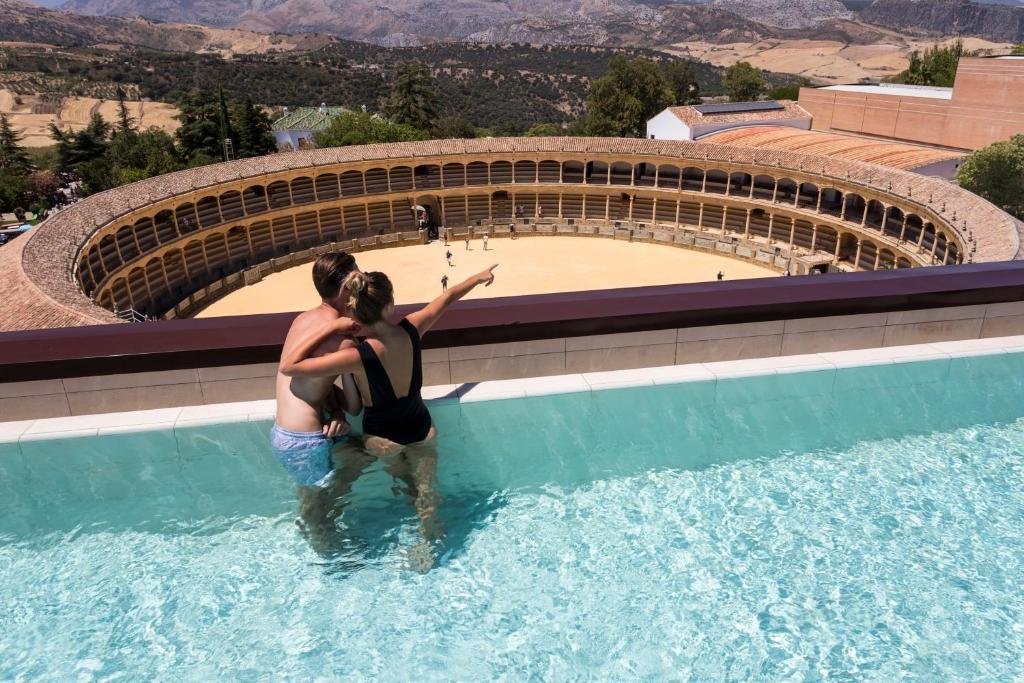
He described it as ideal for:
- Honeymoons
- Quiet escapes
- Slow travel
- Artistic inspiration
Moreover, he praised its comfort, cuisine, and evening atmosphere.
He even noted “the presence of local painters selling watercolours” to visitors, adding to the city’s artistic charm.
Ronda, in his view, required no itinerary. It simply needed to be experienced.
The Darker Imagery of Ronda
Despite its beauty, Hemingway was also drawn to Ronda’s darker symbolism.
He described scenes linked to bullfighting traditions, including the historical disposal of horses into the gorge after events. Vultures circling above became part of his stark visual imagination.

While unsettling, these images reflected his broader fascination with the relationship between beauty and brutality.
For Hemingway, this tension defined Spain itself.
Exile, Return, and the Spanish Divide
After the Spanish Civil War, Hemingway was declared persona non grata by Franco’s regime. His association with Republican sympathies and wartime journalism made his return politically sensitive.
He also chose not to return while imprisoned friends remained in Spain.
During this period, he lived mainly in Cuba and described himself as emotionally separated from the country he loved.
He eventually returned in 1953, reconnecting with Spain’s landscapes and traditions.
Conclusion: Why Ronda Still Matters
The Ronda Hemingway connection continues to shape how the city is understood today.
Ronda influenced Hemingway’s style, his imagination, and his sense of artistic truth. Moreover, it linked him to earlier cultural figures like Goya, creating a long artistic lineage centred on the city.
Today, Ronda remains more than a historic destination. It is a literary landscape where myth, memory, and reality continue to overlap.
For readers and visitors alike, Hemingway’s Ronda still feels present.
FAQ: Hemingway and Ronda – Literary Connections, Bullfighting, and History
Ronda Hemingway connection, Hemingway in Ronda, Ronda bullfighting history, Ernest Hemingway Spain, Goya Pedro Romero Ronda, Tajo gorge Ronda, For Whom the Bell Tolls Ronda theory, Andalusia literary tourism
Hemingway was drawn to Ronda because of its dramatic setting and strong bullfighting culture, both of which aligned with his fascination for themes of risk, beauty, and mortality. The deep Tajo gorge and historic bullring were particularly influential. His early visit in 1923 left a lasting impression, shaping how Spain was later portrayed in his writing. More detailed context is explored within the main article.
Hemingway’s writing style was strongly influenced by what is often described as the “escuela rondeña” approach to bullfighting, valued for its simplicity, restraint, and emotional precision. These qualities were reflected in his prose, which became direct and stripped-back. Elements of Ronda can be seen in Death in the Afternoon and The Sun Also Rises, where the city’s atmosphere is echoed rather than explicitly described in full.
While Hemingway is known to have stayed in Ronda during several visits, no specific hotel has been definitively confirmed in his writings or personal correspondence. He referred generally to comfortable accommodation in the city, praising its hospitality and food. However, many modern claims about exact locations are based on later interpretation rather than documented evidence, so the precise place of stay remains uncertain.
A strong artistic link is often drawn between Francisco de Goya and Hemingway through their shared admiration of Ronda’s bullfighting tradition. Goya portrayed Pedro Romero, while Hemingway later celebrated Antonio Ordóñez. Both artists elevated bullfighting into a symbolic art form reflecting courage and tragedy. This parallel has been widely discussed in cultural studies of Ronda’s literary and artistic legacy.
Chapter 10 of For Whom the Bell Tolls contains a vivid account of early Civil War violence, narrated by the character Pilar. Many scholars have linked the unnamed setting to Ronda due to similarities in historical events and geography. However, this identification remains interpretative rather than explicitly confirmed, and Hemingway himself never directly named the town in the novel.
Hemingway often portrayed Ronda as an ideal place for rest, reflection, and romantic escape. He praised its atmosphere, evening breezes, local cuisine, and scenic views that could be enjoyed without leaving a hotel. The city was described as suitable for honeymoons or quiet retreats. Yet, beneath this charm, he also noted its deeper, more dramatic symbolism linked to Spanish history.

I’ve been living in this lovely area of Western Andalucia for the last 20 years or so and dedicate most of my time to the running of English language tourist information websites for the towns of Cádiz, Ronda, Grazalema, the famous or infamous Caminito del Rey, and also Wildside Holidays, which promotes sustainable and eco-friendly businesses running wildlife and walking holidays in Spain. My articles contain affiliate links that will help you reserve a hotel, bus, train or activity in the area. You don’t pay more, but by using them you do support this website. Thankyou!