Ronda is one of the most picturesque destinations in Spain and the third most visited city in Andalucía. Visitors are drawn to its iconic landmarks, including the Puente Nuevo bridge, the Plaza de Toros bullring, Ronda Cathedral, and the historic Arab Baths.
Beyond the city, the surrounding Ronda Mountains are home to stunning white villages such as Grazalema, Setenil de las Bodegas, Zahara de la Sierra, and Genalguacil, offering breathtaking scenery and traditional Andalusian charm.
A few kilometres from Ronda, just outside the white village of Benaojan lies one of the most spectacular cave systems in Spain, Pileta Paleolithic Cave Paintings at Benaojan and in the mouth of one, several galleries of cave paintings that are as old as 30,000 years, and were created by paleolithic people of Ronda before the last great ice age. Best of all, the caves are open to the public with a local tour guide to explain the significance of the artwork.
I’ve been living in this lovely area of Western Andalucia for the last 20 years or so and dedicate most of my time to the running of English language tourist information websites for the towns of Cádiz, Ronda, Grazalema, the famous or infamous Caminito del Rey, and also Wildside Holidays, which promotes sustainable and eco-friendly businesses running wildlife and walking holidays in Spain. My articles contain affiliate links that will help you reserve a hotel, bus, train or activity in the area. You don’t pay more, but by using them you do support this website. Thankyou!
Ronda’s Arab Baths (Baños Árabes) are one of the best-preserved medieval Islamic bath complexes in the Iberian Peninsula. Located beside the Puente Árabe in the former Muslim suburb of San Miguel, the baths give a fascinating insight into daily life in medieval Ronda and the importance of bathing, cleanliness and socialising in an Islamic city.
The baths date from the 13th and 14th centuries and retain much of their original layout and hydraulic system. The complex includes separate cold, warm and hot rooms, together with the remains of the furnace, aqueduct and water-lifting system that supplied the hammam. The surviving star-shaped skylights, horseshoe arches and water system make it one of the most interesting Moorish monuments in Ronda.
I’ve been living in this lovely area of Western Andalucia for the last 20 years or so and dedicate most of my time to the running of English language tourist information websites for the towns of Cádiz, Ronda, Grazalema, the famous or infamous Caminito del Rey, and also Wildside Holidays, which promotes sustainable and eco-friendly businesses running wildlife and walking holidays in Spain. My articles contain affiliate links that will help you reserve a hotel, bus, train or activity in the area. You don’t pay more, but by using them you do support this website. Thankyou!
I’ve been living in this lovely area of Western Andalucia for the last 20 years or so and dedicate most of my time to the running of English language tourist information websites for the towns of Cádiz, Ronda, Grazalema, the famous or infamous Caminito del Rey, and also Wildside Holidays, which promotes sustainable and eco-friendly businesses running wildlife and walking holidays in Spain. My articles contain affiliate links that will help you reserve a hotel, bus, train or activity in the area. You don’t pay more, but by using them you do support this website. Thankyou!
If you are staying in Ronda for a few days and have a car then you will surely want to get out and about to explore more villages in the area. The White Villages (Pueblos Blancos) encompass the north east of Cádiz and north west of Málaga provinces and this area is saturated in history with palaeolithic cave paintings, neolithic dolmens, bronze and copper age remains, Roman roads, Visigoth fountains and Moorish towers.
I’ve been living in this lovely area of Western Andalucia for the last 20 years or so and dedicate most of my time to the running of English language tourist information websites for the towns of Cádiz, Ronda, Grazalema, the famous or infamous Caminito del Rey, and also Wildside Holidays, which promotes sustainable and eco-friendly businesses running wildlife and walking holidays in Spain. My articles contain affiliate links that will help you reserve a hotel, bus, train or activity in the area. You don’t pay more, but by using them you do support this website. Thankyou!
Here are some quick directions to the bullring (plaza de toros), tourist office, Puente Nuevo and other main monuments. after arriving at Ronda’s bus and rail Stations. (Scroll down for more detailed descriptions and directions.)
How to get to the bullring from the bus station in Ronda
Exit the bus station and follow Calle San Jose to it’s end, then turn left into Calle Doctor Fleming (maps show it as Calle Jerez), and keep going till you reach the Ronda bullring. Check the map below.
How to get to the main monuments in Ronda from the train station
Exit the railway station and walk straight ahead crossing the road in front and walk along the Avenida Martinez Astein pedestrian gardens until you reach the “Carerra Espinel” (known locally as La Bola), then turn right and keep going down hill through this pedestrian shopping street till you reach the bullring. Check the map below.
I’ve been living in this lovely area of Western Andalucia for the last 20 years or so and dedicate most of my time to the running of English language tourist information websites for the towns of Cádiz, Ronda, Grazalema, the famous or infamous Caminito del Rey, and also Wildside Holidays, which promotes sustainable and eco-friendly businesses running wildlife and walking holidays in Spain. My articles contain affiliate links that will help you reserve a hotel, bus, train or activity in the area. You don’t pay more, but by using them you do support this website. Thankyou!
All in all, Ronda is the great place to stay for a night or two if your holiday plans include seeing the Alhambra, the Mezquita, Malaga’s Picasso Museum, the Caminito del Rey (El Chorro), or the annual Jerez Horse Fair.
I’ve been living in this lovely area of Western Andalucia for the last 20 years or so and dedicate most of my time to the running of English language tourist information websites for the towns of Cádiz, Ronda, Grazalema, the famous or infamous Caminito del Rey, and also Wildside Holidays, which promotes sustainable and eco-friendly businesses running wildlife and walking holidays in Spain. My articles contain affiliate links that will help you reserve a hotel, bus, train or activity in the area. You don’t pay more, but by using them you do support this website. Thankyou!
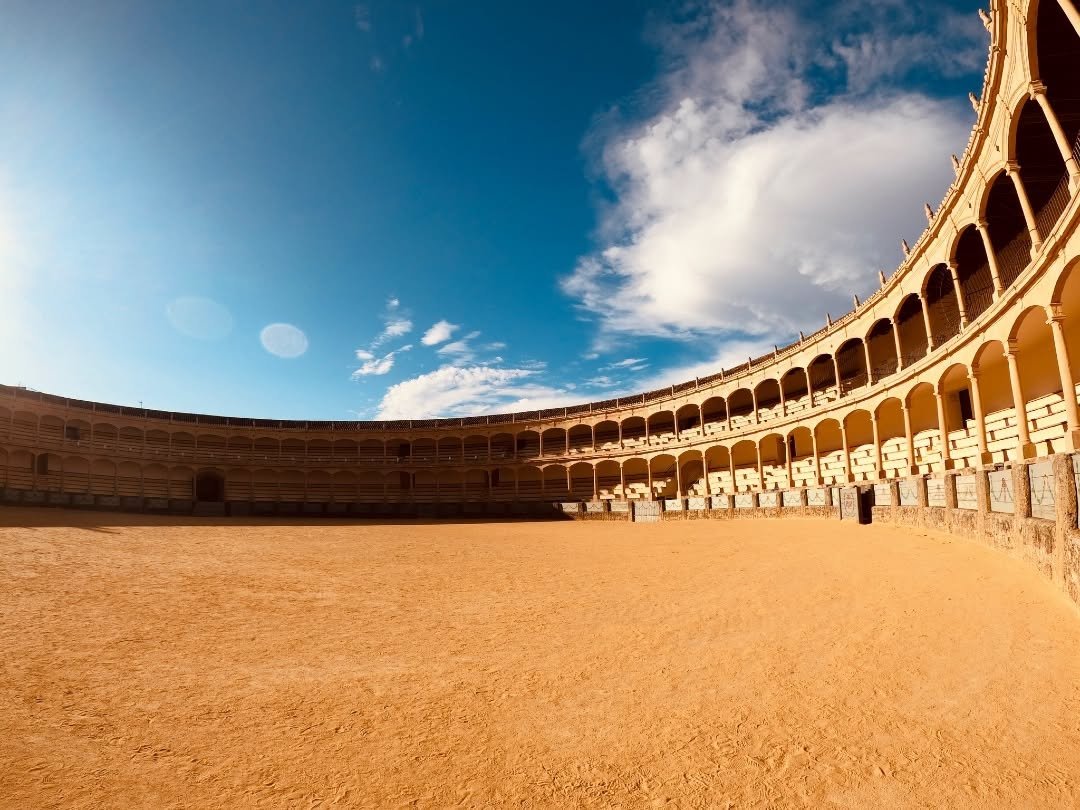
The Plaza de Toros in Ronda is one of the city’s most important historic landmarks and one of the most significant bullrings in Spain. Built in the 18th century, it is closely associated with the Romero family and the development of the Ronda style of bullfighting.
Today, visitors can explore the historic bullring and its museum to learn about Ronda’s role in Spanish culture and the history of bullfighting. You don’t need to be interested in bullfighting itself to appreciate the building, its architecture and its place in Ronda’s history.
Visiting the Plaza de Toros
A visit to the bullring includes access to the arena and museum, where you can learn more about Ronda’s bullfighting history and the Romero dynasty.
Planning your visit to Ronda? The Plaza de Toros is one of the city’s key historic attractions. See our Top 10 places to visit in Ronda for more ideas on what to see and do during your stay.
Agatha Christie: The Seven Dials was filmed in Ronda
Ronda’s Plaza de Toros features in the Netflix miniseries Agatha Christie: The Seven Dials, an adaptation of Agatha Christie’s novel The Secret of Chimneys. Several scenes were filmed in Ronda in September 2024, with the Plaza de Toros among the city’s historic locations used by the production.
The bullring is particularly relevant to the story because the plot has a connection with bullfighting, and it appears in the opening scenes of the series. Other recognisable Ronda locations include the Puente Nuevo, Alameda del Tajo, Arab Baths, Casa del Rey Moro and the area around the Arco de Felipe V.
Would you like to visit a fighting bull farm in Ronda?
Reservatoro Ronda is a working breeding farm for fighting bulls and purebred Andalusian horses, located around 5 km from Ronda. Created by retired bullfighter Rafael Tejada, the farm is open to visitors who can learn about the breeding of fighting bulls and the selection process, while seeing the animals and horses at close quarters.
A visit offers a very different perspective on the traditional world surrounding Ronda’s bullfighting culture and takes you into the countryside just outside the city.
Reservatauro Ronda is an active breeding farm for fighting bulls and purebred Andalusian horses, situated just 5 kilometers from Ronda.
I’ve been living in this lovely area of Western Andalucia for the last 20 years or so and dedicate most of my time to the running of English language tourist information websites for the towns of Cádiz, Ronda, Grazalema, the famous or infamous Caminito del Rey, and also Wildside Holidays, which promotes sustainable and eco-friendly businesses running wildlife and walking holidays in Spain. My articles contain affiliate links that will help you reserve a hotel, bus, train or activity in the area. You don’t pay more, but by using them you do support this website. Thankyou!