Visit the museums of Ronda to explore art, history, and local culture. From historic buildings to modern exhibitions, discover the town’s heritage and creative spirit.
Not only a fantastic shop and “museum of collectables” but a perfect place for breakfast as well, la Casa del Jamón – Deli-Wine Tasting-Bar-Museum is located halfway between the hotel Reina Victoria and the Plaza de Merced.. (uphill from the bullring by about 600 metres)
I’ve been living in this lovely area of Western Andalucia for the last 20 years or so and dedicate most of my time to the running of English language tourist information websites for the towns of Cádiz, Ronda, Grazalema, the famous or infamous Caminito del Rey, and also Wildside Holidays, which promotes sustainable and eco-friendly businesses running wildlife and walking holidays in Spain. My articles contain affiliate links that will help you reserve a hotel, bus, train or activity in the area. You don’t pay more, but by using them you do support this website. Thankyou!
When you get to Ronda (even if you have found Ronda Today useful) the first place on your list of visits should be the Tourist Office which is located by the bull ring (Plaza de Toros.) It is here that the English speaking staff can give you the most up to date info on whats going on in Ronda such as concerts, exhibitions and sell you the “tourist ticket”.
I’ve been living in this lovely area of Western Andalucia for the last 20 years or so and dedicate most of my time to the running of English language tourist information websites for the towns of Cádiz, Ronda, Grazalema, the famous or infamous Caminito del Rey, and also Wildside Holidays, which promotes sustainable and eco-friendly businesses running wildlife and walking holidays in Spain. My articles contain affiliate links that will help you reserve a hotel, bus, train or activity in the area. You don’t pay more, but by using them you do support this website. Thankyou!
Ronda, a picturesque town perched atop the El Tajo gorge in Andalusia, Spain, has long been known as the “City of Dreams.” This enchanting epithet encapsulates the town’s ethereal beauty, rich history, and cultural significance.
But why has Ronda been bestowed with such a dreamy title? The answer can be found in one of the most influential voices to associate Ronda with dreams, the poet Rainer Maria Rilke. Read on!
I’ve been living in this lovely area of Western Andalucia for the last 20 years or so and dedicate most of my time to the running of English language tourist information websites for the towns of Cádiz, Ronda, Grazalema, the famous or infamous Caminito del Rey, and also Wildside Holidays, which promotes sustainable and eco-friendly businesses running wildlife and walking holidays in Spain. My articles contain affiliate links that will help you reserve a hotel, bus, train or activity in the area. You don’t pay more, but by using them you do support this website. Thankyou!
Hidden among the olive groves on the outskirts of Ronda, LA Almazara stands like a monolith from another world. Designed by renowned French architect Philippe Starck, this red cube-shaped building is not just an olive oil mill—it’s a surreal blend of art, architecture, and Andalusian heritage. In a region known for whitewashed villages and traditional cortijos, LA Almazara is a bold departure and a fresh reason to visit Ronda. So let’s take a look Inside LA Almazara: Philippe Starck’s Surreal Olive Oil Mill in Ronda
I’ve been living in this lovely area of Western Andalucia for the last 20 years or so and dedicate most of my time to the running of English language tourist information websites for the towns of Cádiz, Ronda, Grazalema, the famous or infamous Caminito del Rey, and also Wildside Holidays, which promotes sustainable and eco-friendly businesses running wildlife and walking holidays in Spain. My articles contain affiliate links that will help you reserve a hotel, bus, train or activity in the area. You don’t pay more, but by using them you do support this website. Thankyou!
Ronda’s Arab Baths (Baños Árabes) are one of the best-preserved medieval Islamic bath complexes in the Iberian Peninsula. Located beside the Puente Árabe in the former Muslim suburb of San Miguel, the baths give a fascinating insight into daily life in medieval Ronda and the importance of bathing, cleanliness and socialising in an Islamic city.
The baths date from the 13th and 14th centuries and retain much of their original layout and hydraulic system. The complex includes separate cold, warm and hot rooms, together with the remains of the furnace, aqueduct and water-lifting system that supplied the hammam. The surviving star-shaped skylights, horseshoe arches and water system make it one of the most interesting Moorish monuments in Ronda.
I’ve been living in this lovely area of Western Andalucia for the last 20 years or so and dedicate most of my time to the running of English language tourist information websites for the towns of Cádiz, Ronda, Grazalema, the famous or infamous Caminito del Rey, and also Wildside Holidays, which promotes sustainable and eco-friendly businesses running wildlife and walking holidays in Spain. My articles contain affiliate links that will help you reserve a hotel, bus, train or activity in the area. You don’t pay more, but by using them you do support this website. Thankyou!
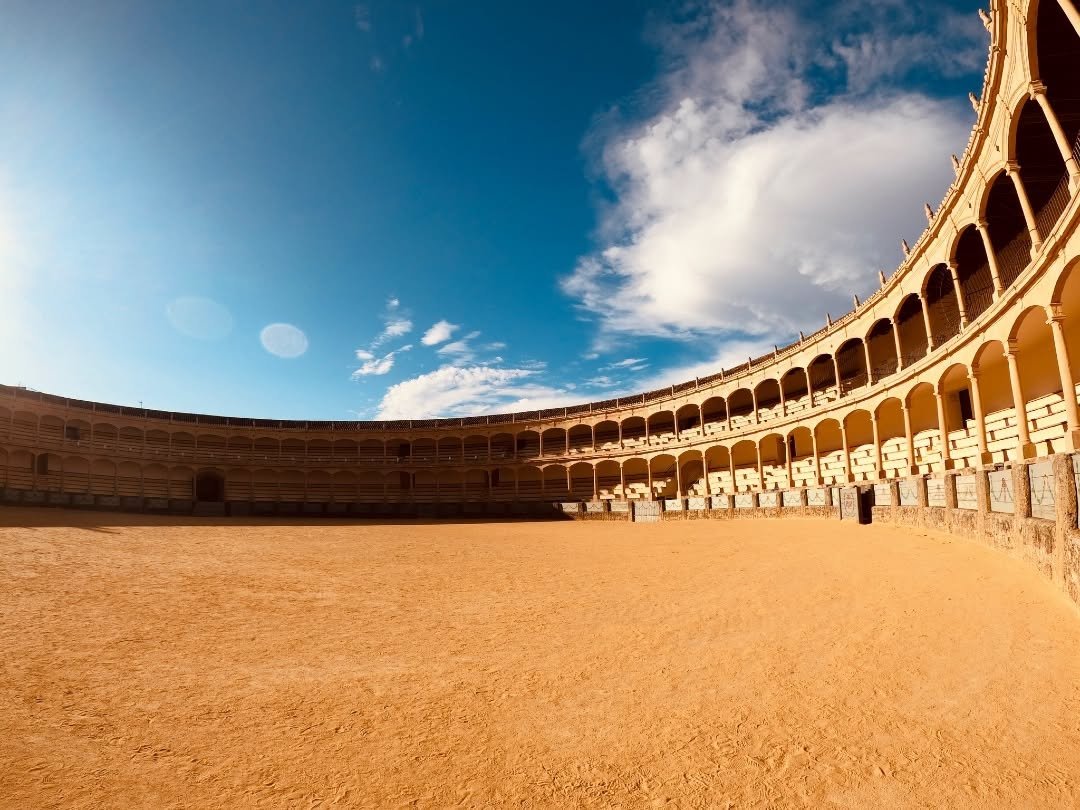
The Plaza de Toros in Ronda is one of the city’s most important historic landmarks and one of the most significant bullrings in Spain. Built in the 18th century, it is closely associated with the Romero family and the development of the Ronda style of bullfighting.
Today, visitors can explore the historic bullring and its museum to learn about Ronda’s role in Spanish culture and the history of bullfighting. You don’t need to be interested in bullfighting itself to appreciate the building, its architecture and its place in Ronda’s history.
Visiting the Plaza de Toros
A visit to the bullring includes access to the arena and museum, where you can learn more about Ronda’s bullfighting history and the Romero dynasty.
Planning your visit to Ronda? The Plaza de Toros is one of the city’s key historic attractions. See our Top 10 places to visit in Ronda for more ideas on what to see and do during your stay.
Agatha Christie: The Seven Dials was filmed in Ronda
Ronda’s Plaza de Toros features in the Netflix miniseries Agatha Christie: The Seven Dials, an adaptation of Agatha Christie’s novel The Secret of Chimneys. Several scenes were filmed in Ronda in September 2024, with the Plaza de Toros among the city’s historic locations used by the production.
The bullring is particularly relevant to the story because the plot has a connection with bullfighting, and it appears in the opening scenes of the series. Other recognisable Ronda locations include the Puente Nuevo, Alameda del Tajo, Arab Baths, Casa del Rey Moro and the area around the Arco de Felipe V.
Would you like to visit a fighting bull farm in Ronda?
Reservatoro Ronda is a working breeding farm for fighting bulls and purebred Andalusian horses, located around 5 km from Ronda. Created by retired bullfighter Rafael Tejada, the farm is open to visitors who can learn about the breeding of fighting bulls and the selection process, while seeing the animals and horses at close quarters.
A visit offers a very different perspective on the traditional world surrounding Ronda’s bullfighting culture and takes you into the countryside just outside the city.
Reservatauro Ronda is an active breeding farm for fighting bulls and purebred Andalusian horses, situated just 5 kilometers from Ronda.
I’ve been living in this lovely area of Western Andalucia for the last 20 years or so and dedicate most of my time to the running of English language tourist information websites for the towns of Cádiz, Ronda, Grazalema, the famous or infamous Caminito del Rey, and also Wildside Holidays, which promotes sustainable and eco-friendly businesses running wildlife and walking holidays in Spain. My articles contain affiliate links that will help you reserve a hotel, bus, train or activity in the area. You don’t pay more, but by using them you do support this website. Thankyou!
The House of the Giant, otherwise known as the Casa del Gigante in Ronda’s old city is one of the most complete examples of Nasrid architecture outside of Granada and definitely a destination that should be on your list of places to see in Ronda.
This house is located in a quiet plaza behind the Santa Maria La Mayor church, and directly across from the Museo Peinado. The Casa del Gigante is just 2 minutes walk from the Puente Nuevo and Plaza d’España, and not too far from the Mondragon Palace. A statue of Vincent Espinel is located directly in front of the entrance to the House of the Giant.
The palace was already more than 100 years old at the time of the fall of Ronda to Ferdinand’s army in 1485 and apart from some redecorating in the 17th century is still largely complete as a Moorish building.
I’ve been living in this lovely area of Western Andalucia for the last 20 years or so and dedicate most of my time to the running of English language tourist information websites for the towns of Cádiz, Ronda, Grazalema, the famous or infamous Caminito del Rey, and also Wildside Holidays, which promotes sustainable and eco-friendly businesses running wildlife and walking holidays in Spain. My articles contain affiliate links that will help you reserve a hotel, bus, train or activity in the area. You don’t pay more, but by using them you do support this website. Thankyou!