The eight spout fountain in front of the Church of our Father Jesus was built during the 1700s under the reign of Carlos III. Back in those days the Padre Jesus district of Ronda was its commercial centre. Many of the buildings around the church and fountain were home to bars and inns, and the fountain was considered an essential addition.
Walk from Ronda, Tajo del Abanico
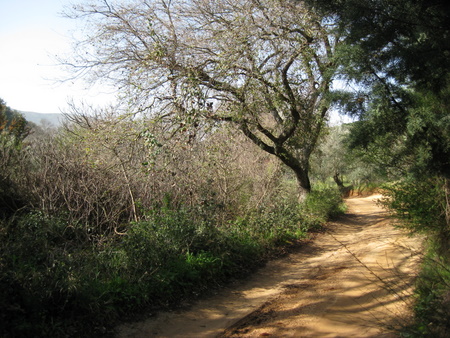
The walk to the Tajo del Abanico, named for the cave that looks like a fan (abanico), is a gentle walk measuring about 4.5km from the Almocabar gate at the entrance to the medieval walls of Ronda in the Barrio de San Francisco. It is of low difficulty, and takes you to a river valley filled with wildflowers in the spring and summer. (very hot in the summer months)
Hotel La Colegiata Apartamentos, Ronda
The Apartamentos La Colegiata de Ronda. are self catered holiday apartments for guests who want the convenience of check-in and check-out with the privacy that comes from your own apartment, ideal for visitors needing a home away from home or an extended stay in Ronda.
The apartments are located in Plaza Duquesa de Parcent, the geographical centre of Ronda’s Moorish quarter and are within a 19th century building that has been recently renovated. Its current design mirrors the traditional Andalusian architectural style with wrought-iron windows and hardwood floors.
Ronda Walk to Pilar de Cartajima and Roman Aqueduct
This is one of the walks most people want to do because of the Roman Aqueduct you see at the end of the walk, but is also one of the walks in Ronda rarely undertaken by visitors because very few people know the Roman aqueduct even exists, in fact Roman Ronda was a reality for nearly 700 years.
You’ll start the walk at the old entrance to Ronda, the Almocabar Gate which originally was used to reach the Muslim cemetery outside the city walls. In fact the plaza you walk across at the start is where the cemetery was. During the reconquest Spain’s Christian monarchs attacked Ronda from locations near the plaza.
Malaga’s La Concepcion Botanical Gardens
Botanical gardens around the world are often a must-see visit while traveling, and Malaga’s La Concepcion Gardens are no different, though the gardens in Malaga have justifiably attracted a reputation for being amongst the best in Europe.
The gardens were founded in 1850 by Amalia Heredia Livermore and her husband Jorge Loring Oyarzabal who travelled the world in search of tropical plants for their garden, in the centre of which they built a traditional Andalucian palace replete with indoor courtyard.