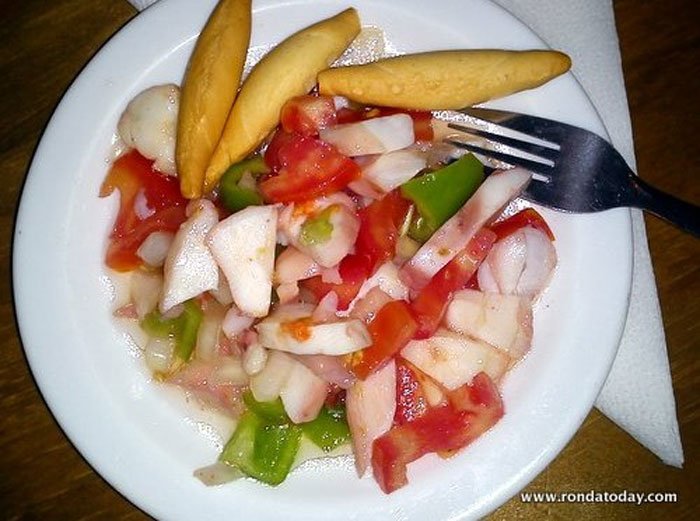
Understanding Tapas in Ronda
Tapas are much more than small plates of food. In Ronda, they’re part of everyday life — a chance to meet friends, share a drink and enjoy a few dishes before moving on to the next bar. Whether you’re ordering a simple slice of jamón on bread or a plate of sizzling garlic prawns, eating de tapas is one of the most enjoyable ways to experience the city.

The Origins of Tapas
The word tapa means “cover” in Spanish. One popular explanation is that a slice of bread or cured meat was placed over a glass of wine to keep flies away, although several stories exist about how the tradition began.
Whatever its true origin, tapas became part of everyday life across Andalusia. In Ronda, the tradition is still very much alive, with locals moving from bar to bar, ordering a drink and sharing a few small dishes rather than sitting down for one large meal.

A Gastronomic Journey Through Ronda
One of the pleasures of eating in Ronda is that you don’t need to book an expensive restaurant to eat well. Some of the best tapas are found in busy neighbourhood bars where locals stop for a drink after work.
You’ll find everything from jamón ibérico, croquetas and ensaladilla rusa to grilled pinchos morunos, local cheeses and seasonal specials that change from one bar to the next. Pair them with a glass of Ronda wine, a cold beer or a vermouth, and you’ve experienced one of the city’s favourite traditions.
The real secret is to ir de tapas — order a drink, share a couple of dishes, then wander to the next bar rather than staying in one place all evening.

1964: When Britain Discovered Spain’s “Nation of Nibblers”
This wonderfully dated 1964 BBC Tonight film pokes fun at Spanish eating habits, describing Spaniards as a “nation of nibblers” because they preferred small bites throughout the day instead of one enormous meal. The humour is unmistakably British and very much of its era, but it’s fascinating to watch because the heart of tapas culture hasn’t really changed — sharing food, moving between bars and enjoying good company are still part of everyday life in Ronda.
Tips for Enjoying Tapas in Ronda
The best way to enjoy tapas in Ronda is to ir de tapas — have a drink and one or two dishes, then move on to another bar. Every place has its own specialities, so don’t be afraid to wander.
Take a quick look inside before choosing a table. If a bar is busy with locals, especially around lunchtime or early evening, it’s usually a good sign that the food is fresh and the atmosphere is authentic.
A few useful local tips:
The Four Food Portion Sizes You’ll See in Ronda
- Pincho – A bite-sized snack, often served on bread.
- Tapa – A small dish, ideal for sharing with a drink.
- Media ración – Half a portion, perfect for two people.
- Ración – A full-sized plate for sharing or a substantial meal.
Most tapas bars display their menu on a board, on printed menus, or in a glass counter filled with tempting dishes. If you eat at the bar, you’ll usually pay the listed price. Table or terrace service often costs a little more, and in most traditional bars you simply settle the bill when you’ve finished eating.
Check out my favorite place in Ronda for trying local Jamón and other delicacies. The Casa del Jamón: https://rondatoday.com/la-casa-del-jamon-deli-wine-tasting-bar-museum/
- Read about paella here: https://rondatoday.com/a-traditional-paella-recipe-made-in-ronda/
- Read about a traditional venta or roadside restaurant here: https://rondatoday.com/ventas-in-spain-el-tropezon-in-the-village-of-montecorto/
- Read about Vegetarian, Vegan and Gluten free food in Ronda here: https://rondatoday.com/vegetarian-and-vegan-food-in-ronda-gluten-free-as-well/
Classic Tapas You’ll See on Menus in Ronda
Don’t worry if the menu is entirely in Spanish — these are some of the most common tapas you’ll come across in Ronda, with their English translations.
- Aceitunas (rellenos) – Olives (stuffed).
- Albondigas – Meatballs.
- Almendras saladas – Salted almonds.
- Boquerones en vinagre – Fresh anchovies in vinegar.
- Calamares rellenos – Stuffed baby squid.
- Calamares a la Romana – Fried battered squid rings.
- Calamares en su tinta – Squid cooked in its ink.
- Chanquetes – Fried whitebait.
- Chorizo al Vino – Spicy sausage in red wine.
- Croquetas – Croquettes.
- Empanadas – Flat pastries normally filled with tuna or meat.
- Empanadilla – Small fried pasties.
- Ensaladilla rusa – Russian salad.
- Flamenquines – Ham and pork pastry rolls.
- Fritura de pescado – Flash fried fish.
- Gambas al ajillo – Prawns in garlic.
- Huevos rellenos – Stuffed hard boiled eggs.
- Jamon serrano – Cured ham.
- Mejillones al vapor – Steamed mussels.
- Pan con tomate – Bread rubbed with fresh tomatoes.
- Patatas alioli – Potatoes in garlic mayonnaise.
- Patatas Bravas – Potatoes in a spicy sauce.
- Pimientos de Padrón – Fried hot small green peppers.
- Pincho moruno – Grilled meat brochette (can be pork or chicken).
- Pisto manchego – Ratatouille with meat.
- Pollo al ajillo – Garlic chicken.
- Revuelto – Scrambled eggs.
- Riñones al Jerez – Kidneys in sherry.
- Tortilla Española – Spanish Omelette.
Eat Like a Local in Ronda
The best tapas experience in Ronda isn’t about ticking famous dishes off a list. It’s about wandering between busy bars, ordering a drink, sharing a couple of plates and discovering your own favourites along the way.
Whether it’s jamón ibérico, croquetas, ensaladilla rusa or a perfectly cooked pincho moruno, you’ll quickly discover that tapas are as much about conversation and atmosphere as they are about the food.
And if you’re looking for somewhere to start, my favourite recommendation is still La Casa del Jamón.
After a leisurely tapas lunch, one of my favourite walks is heading towards the Puente Nuevo and, if you’re feeling energetic, continuing down the Camino del Desfiladero del Tajo for one of Ronda’s most spectacular views.
Essential FAQs About Tapas in Ronda: A Guide to Spain’s Culinary Tradition
Tapas are small dishes that form a cornerstone of Spanish cuisine, originating in Andalusia. More than just food, they symbolize Spain’s social culture by encouraging friends and family to share flavors in a relaxed, communal setting. This tradition fosters hospitality and connection, making tapas an integral part of daily life in Ronda and across Spain.
The word “tapa” means “cover” in Spanish. Historically, a slice of bread or meat was placed over a glass of wine to keep flies away. Over time, these simple covers evolved into the varied and delicious small dishes we now know as tapas.
Ronda’s tapas scene offers a rich blend of traditional dishes and creative modern twists. Classics like jamón ibérico (Iberian ham) and patatas bravas (potatoes in spicy sauce) sit alongside innovative creations by local chefs. Tapas here are often paired with regional wines or sherries, enhancing the experience. The ritual of “ir de tapas” (tapa-hopping) is deeply embedded in Ronda’s social fabric.
To enjoy tapas fully:
Visit several bars to taste different specialties.
Look for places popular with locals—they often serve the best food at reasonable prices.
Engage with locals to discover hidden gems and stories behind dishes.
Pair tapas with local wines or sherries for a complete experience.
Remember, tapas are about enjoying good company and the moment, not just the food.
Spanish food servings come in four main sizes:
Pincho: Bite-sized portions.
Tapa: Small saucer-sized servings.
Media-ración: Half a plate.
Ración: A full plate.
Tapas menus are usually displayed at the bar or on wall boards. Many tapas bars present trays of food under glass counters for you to choose from. When eating at the bar, you pay the listed price. Eating at a table or on a terrace (“terraza”) usually costs more. Typically, you settle the bill after finishing your meal rather than upfront.
Some classic tapas you can enjoy in Ronda include:
Aceitunas (stuffed olives)
Albondigas (meatballs)
Boquerones en vinagre (fresh anchovies in vinegar)
Calamares a la Romana (fried battered squid rings)
Chorizo al Vino (spicy sausage in red wine)
Croquetas (croquettes)
Ensaladilla de Rusa (Russian potato salad)
Gambas al ajillo (garlic prawns)
Jamón serrano (cured ham)
Patatas Bravas (spicy potatoes)
Pimientas de Padrón (fried small green peppers)
Tortilla Española (Spanish omelette)

I’ve been living in this lovely area of Western Andalucia for the last 20 years or so and dedicate most of my time to the running of English language tourist information websites for the towns of Cádiz, Ronda, Grazalema, the famous or infamous Caminito del Rey, and also Wildside Holidays, which promotes sustainable and eco-friendly businesses running wildlife and walking holidays in Spain. My articles contain affiliate links that will help you reserve a hotel, bus, train or activity in the area. You don’t pay more, but by using them you do support this website. Thankyou!